
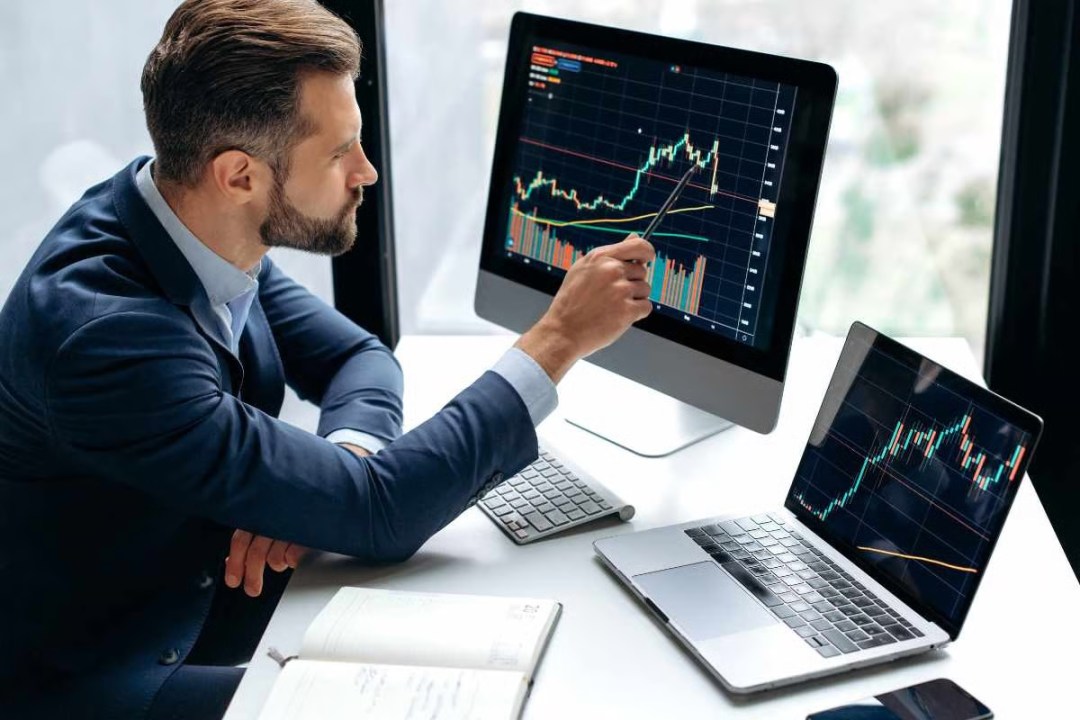
Introduction: The Hidden Engine of Global Finance
The foreign exchange market—commonly known as Forex or FX—is the lifeblood of international commerce. While most people are familiar with currency exchange in the context of travel, few understand the sheer magnitude of this global financial mechanism. Trading over $7 trillion every day, the Forex market dwarfs stock and commodity markets in size and liquidity. It is a realm where nations, institutions, and individuals converge, all participating in a complex ballet of supply and demand, risk and reward.
Yet despite its prominence, Forex remains a mystery to many. This article seeks to demystify the art and science of Forex trading, offering a comprehensive and thoughtful guide to what it is, how it works, and what it demands of those who enter its dynamic domain.
What is Forex Trading?
At its core, Forex trading is the act of exchanging one currency for another with the intent of making a profit from changes in exchange rates. It always involves currency pairs—for example, EUR/USD—where the first currency is bought while the second is simultaneously sold. The goal is simple: buy low, sell high (or vice versa), based on anticipated movements in value.
Unlike centralized exchanges like the NYSE, Forex operates over-the-counter (OTC), meaning transactions are conducted directly between parties, typically via electronic platforms. The market functions 24 hours a day during weekdays, cycling through financial centers across time zones—from Sydney to Tokyo, London to New York.
The Players in the Forex Arena
The sheer size of the Forex market is due to the diverse and powerful entities that participate in it. Understanding who trades—and why—adds important context for individual traders.
-
Central Banks: These are the architects of national monetary policy. Through interest rate adjustments and open market operations, central banks influence the value of their domestic currency.
-
Commercial and Investment Banks: These institutions engage in Forex for clients and their proprietary trading desks, making up a large portion of daily volume.
-
Multinational Corporations: Companies involved in global trade use Forex to hedge currency risk and manage international operations efficiently.
-
Hedge Funds and Asset Managers: Speculative traders who use complex strategies to profit from currency fluctuations.
-
Retail Traders: Individual investors—thanks to online platforms—who now make up a growing share of the market.
Each player brings unique motivations, creating a dynamic interplay of short-term speculation and long-term economic policy.
How Currency Pairs Work
All Forex trades are executed in pairs, with one currency being exchanged for another. The base currency is the first in the pair, and the quote currency is the second. The price of a pair reflects how much of the quote currency is needed to purchase one unit of the base currency.
Categories of Currency Pairs
-
Major Pairs: Include the U.S. dollar and another major currency (e.g., EUR/USD, GBP/USD).
-
Minor Pairs: Exclude the dollar but include major currencies like EUR/GBP or EUR/JPY.
-
Exotic Pairs: Combine a major currency with one from an emerging market (e.g., USD/THB, EUR/TRY).
Major pairs tend to have lower spreads and greater liquidity, making them popular among beginners and professionals alike.
Why Trade Forex?
Forex trading offers unique advantages, many of which stem from its global, round-the-clock nature.
Key Benefits
-
High Liquidity: Easily enter and exit positions due to constant demand and large trading volumes.
-
Low Transaction Costs: Most brokers offer tight spreads, especially on major pairs.
-
Accessibility: Open to anyone with a computer and an internet connection.
-
Leverage: Control large positions with relatively small capital, though this magnifies both gains and losses.
-
Diverse Strategies: From scalping to long-term macroeconomic analysis, traders can tailor strategies to their temperament.
Forex is as much about intellectual engagement as financial opportunity—a game of probabilities, patience, and precision.
Popular Trading Strategies
Just as no two traders are alike, strategies vary widely. Successful trading depends not only on technique but also on self-awareness and risk tolerance.
Common Approaches
-
Scalping: Short-term trades lasting seconds or minutes, focused on tiny price movements.
-
Day Trading: Positions are opened and closed within the same day to avoid overnight risk.
-
Swing Trading: Captures medium-term moves over several days, using technical and fundamental signals.
-
Position Trading: Long-term trades based on broad economic trends, often holding for weeks or months.
Traders may blend these strategies or evolve them over time. The key is consistency, not complexity.
The Crucial Role of Risk Management
Forex can be rewarding, but it is equally unforgiving. The use of leverage can rapidly amplify both profits and losses, making risk management absolutely essential.
Core Risk Management Principles
-
Use Stop-Loss Orders: Automatically exit trades when the market moves against you beyond a predetermined point.
-
Limit Position Sizes: Avoid overexposing your capital by controlling how much you risk on each trade.
-
Apply the 1% Rule: Risk no more than 1% of your total account balance on a single trade.
-
Diversify Exposure: Trade multiple currency pairs rather than concentrating risk on one.
Discipline is what separates seasoned traders from novices. Emotions may tempt, but rules protect.
Technical vs. Fundamental Analysis
To forecast currency movements, traders typically rely on two primary schools of analysis.
-
Technical Analysis: Focuses on price charts, patterns, and indicators like Moving Averages, Relative Strength Index (RSI), and Bollinger Bands.
-
Fundamental Analysis: Considers economic data, interest rates, inflation, political events, and central bank policies.
A sophisticated trader often uses a blend of both. For example, a technical breakout may only be validated by a dovish interest rate announcement or geopolitical tension.
Trading Psychology: Mastering the Self
Perhaps the greatest challenge in Forex isn’t market knowledge but emotional discipline. Markets can trigger powerful responses—greed during a winning streak, fear after losses, and frustration during uncertainty.
Psychological Traps
-
Overtrading: Excessive trading driven by emotion rather than logic.
-
Revenge Trading: Attempting to “win back” losses quickly, often leading to larger drawdowns.
-
Impatience: Entering trades too early or exiting too soon, undermining well-laid plans.
A mature trader recognizes that discipline trumps excitement, and that trading is a marathon—not a sprint.
Conclusion: The Art and Architecture of Forex Mastery
Forex trading is a discipline that blends economic insight, strategic thinking, and emotional control. It is as much about precision as intuition, and as much about risk management as reward-seeking. For those who approach it with diligence and humility, Forex offers not just financial opportunity, but a fascinating lens through which to view the rhythms of the global economy.

 247 Finance News